%201.svg)


%201.svg)




When we picture the "American Spirit," we often think of a rugged individualism. But at its core, that spirit is about something deeper; resilience, a commitment to community, and the willingness to serve a cause greater than oneself. While these values are celebrated nationally, they are practiced daily by one specific group, America’s veterans. For those who have served, the mission doesn't end when the uniform is hung up. The skills, discipline, and ethos forged in service are simply redeployed to new objectives. In towns and cities across the country, veterans are the quiet guardians of the American Spirit, leading not with orders, but with action.
The Mission Becomes the Community
In the military, the objective is clear and the team is paramount. Veterans translate this operational mindset directly to their own neighborhoods. They don't just see problems; they see a mission, assemble a team, and execute.
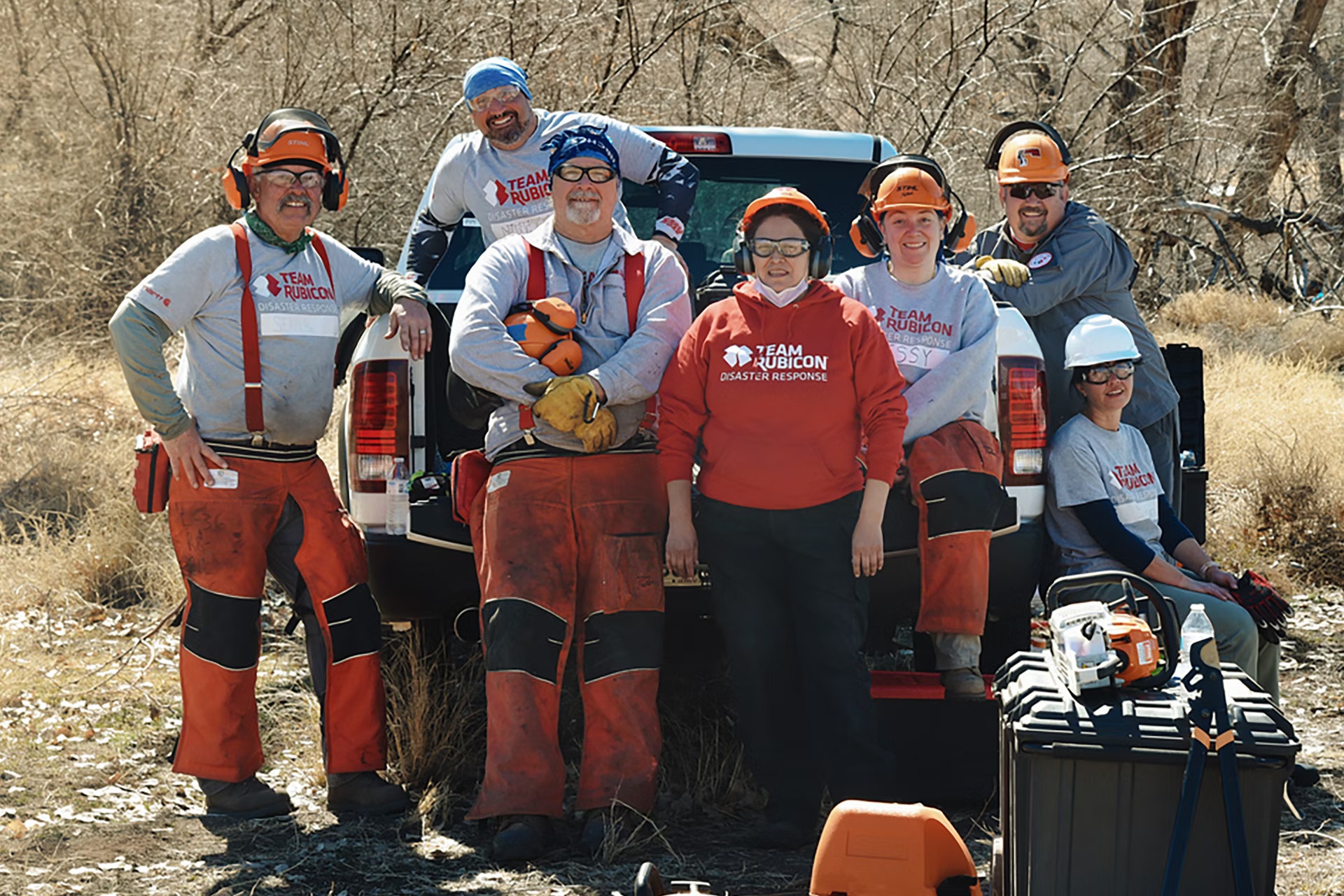
The most potent example is Team Rubicon. Founded by Marine veteran Jake Wood, this nonprofit leverages the skills of military veterans to deploy emergency response teams to disaster zones. When a hurricane or tornado strikes, these "Grey shirts" are on the ground, often before anyone else, clearing debris, mucking out homes, and organizing logistics with battlefield efficiency. Their 2023 impact report, for instance, detailed 128 domestic operations, serving over 10,900 individuals. They are not waiting for permission; they are continuing their oath to serve.
This same spirit is captured by The Mission Continues, which empowers veterans to serve in under-resourced communities. Their "Service Platoons," active in over 40 cities, bring veterans and non-veterans together to tackle local challenges like food insecurity and revitalizing community spaces.
Leadership Through Mentorship
Military leadership is fundamentally built on mentorship. The sergeant trains the private; the SNCO develops the NCO. This passion for "building up" others is a skill veterans carry into every post-military role, especially in business.
Organizations like Bunker Labs and American Corporate Partners are built on this principle. Bunker Labs, now part of Syracuse University's D'Aniello Institute for Veterans and Military Families, creates a nationwide ecosystem for veteran and military spouse entrepreneurs. It’s not just a business incubator; it's a peer-to-peer mentorship network where successful "vetrepreneurs" teach the next generation how to translate military grit into a business plan.
Similarly, ACP’s Veteran Mentoring Program provides a yearlong, one-on-one mentorship, pairing veterans with senior business leaders. This isn't just career advice; it's a deliberate transfer of knowledge, helping veterans navigate the corporate world and empowering them to become leaders in their new field.
Service as a Lifelong Ethos
Perhaps the most significant way veterans keep the American spirit alive is by simply showing up. A 2025 report from We the Veterans and Military Families highlighted the powerful truth that veterans are more civically engaged than their civilian peers.
According to the 2025 Veterans Civic Health Index, veterans who volunteer dedicate significantly more time, averaging 93 hours a year compared to 69 hours for non-veterans. They are also more likely to vote in local elections and belong to local civic groups. They are the ones running for the school board, coaching local teams, or managing the local food bank. This isn't for recognition. It is the ingrained, reflexive action of a person who was trained to believe that they are personally responsible for the well-being of the group.
The American Spirit is not a passive feeling; it is the active, daily choice to build, to lead, and to serve. Veterans didn't just defend that spirit, they embody it.