%201.svg)


%201.svg)


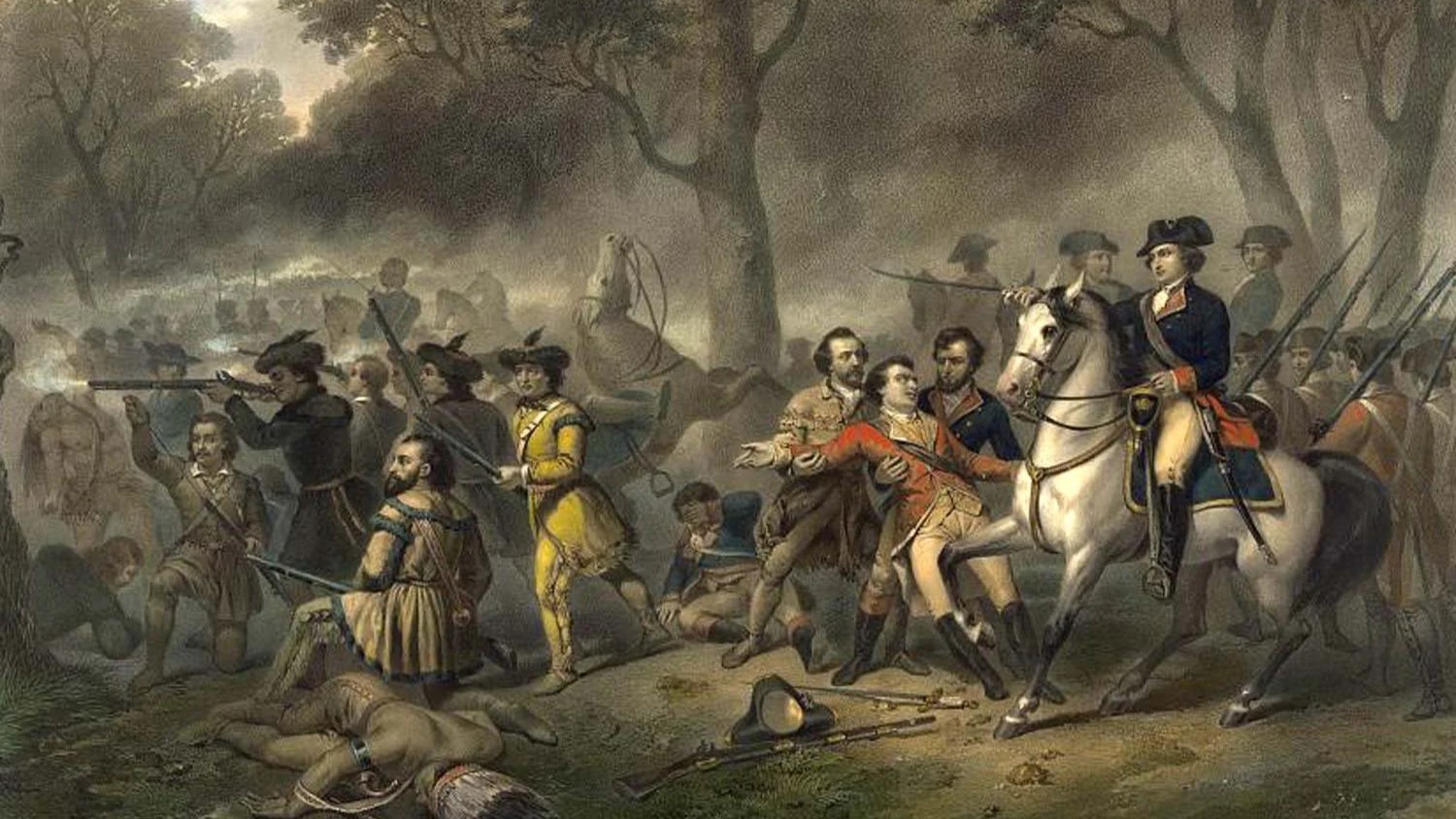


In the sanitized, hyper-partisan lexicon of the 21st century, the label "domestic terrorist" is a potent political weapon. It is used to condemn those who use violence or illegal force to challenge the established authority of a government. If we apply this modern, rigid definition to the past, stripping away the crucial context of time and tyranny, a startling and uncomfortable conclusion emerges; George Washington, the "Father of His Country," would almost certainly be branded a domestic terrorist today.
By the standards of 1775, Washington was a British subject. The government of King George III was the legitimate, recognized authority in the American colonies. When Washington accepted command of the Continental Army, he became the leader of an armed insurrection against that authority. From the perspective of the British Crown, he was a traitor engaged in sedition. King George III himself, in his 1775 "Proclamation for Suppressing Rebellion and Sedition," condemned the colonial leaders for their "disorderly acts" and declared them traitors who had "proceeded to open and avowed rebellion."
Washington’s military tactics, born of necessity, would also draw scrutiny today. He commanded an irregular, often outmatched force that relied on asymmetrical warfare. The surprise attack on the Hessian garrison at Trenton on Christmas night was a brilliant strategic move, but it was also a sneak attack, a departure from the formal, field-of-battle conventions of the era. His army targeted British supply lines, employed sharpshooters to pick off officers, and relied on a network of spies and informants, hallmarks of any successful insurgency. To the British, this was not honorable warfare; it was the work of a rogue militia leader defying the rule of law.
And yet, to defend Washington is not to argue semantics, but to assert the primacy of moral truth over political labels. The battlefield has changed, from the fields of Lexington and Concord to the digital and ideological arenas of today. But the core principles that separate a patriot from a terrorist, the pursuit of liberty and the rejection of tyranny, remain constant.
Washington and the colonists did not take up arms in a vacuum. They fought because the established government had become, in their eyes, illegitimate through its actions. They were denied the fundamental rights of Englishmen, subjected to "taxation without representation," and ruled by a distant power that was deaf to their grievances. The Declaration of Independence was not a call for anarchy, but a meticulously argued case that the government had broken its social contract. They were not fighting to destroy a system that offered them a voice; they were fighting against a system that had systematically silenced them.
The ultimate defense of Washington, however, lies not in his methods, but in his motives and his ultimate goal. A terrorist seeks to sow chaos and seize power for a narrow, often fanatical, end. Washington sought to build a nation grounded in the consent of the governed. His entire struggle was aimed at creating a system where political change could happen peacefully, through debate and the ballot box, so that future generations would not have to resort to muskets.
His greatness is cemented by what he did after the victory. At the height of his power, with an army at his back, he did not make himself a king. He voluntarily surrendered his sword to a civilian Congress, establishing the bedrock principle of military subordination to civilian rule. He believed, in his own words, that the "sacred fire of liberty" had been entrusted to the hands of the American people. A man who fights to create a system of ordered liberty and then willingly relinquishes power is the antithesis of a terrorist.
To label Washington a terrorist is to ignore the moral dimension of his cause. It is an act of historical illiteracy that flattens the complexities of the past into the shallow rhetoric of the present. While cultures evolve and the nature of conflict shifts, the line between fighting for freedom and fighting for oppression remains. Washington stood firmly on the side of freedom, and that is a truth no modern political label can erase.