%201.svg)


%201.svg)




The U.S. military is renowned for its demanding training programs, designed to forge the world's most capable warfighters out of anyone with the strength of will to make it to graduation. These schools are crucibles, intentionally engineered to push individuals to their absolute mental and physical limits, ensuring that only the most resilient and competent earn their place in elite units. While difficulty can be subjective, a look at the staggering attrition rates and the sheer intensity of the training provides a clear picture of the toughest courses the armed forces have to offer.
5. U.S. Army Sapper Leader Course
Attrition Rate: Approx. 40-50%
The Sapper Leader Course is a grueling 28-day trial for Army combat engineers. Far more than a construction course, it is a leadership school that trains soldiers in advanced combat tactics, mountaineering, and demolition. Students endure long patrols with heavy equipment, minimal sleep, and constant stress. The course is designed to find and forge leaders who can perform complex engineering tasks under direct enemy fire. With a failure rate that often hovers around 50%, earning the Sapper tab signifies a combat engineer who has been tested and proven under extreme pressure.
4. U.S. Army Ranger School
Attrition Rate: Approx. 50-60%
Considered one of the premier and most challenging leadership schools in the world, Ranger School is 61 days of purposeful, systematic starvation and sleep deprivation. The course is broken into three phases, each designed to test soldiers' physical stamina, mental resilience, and ability to lead under extreme duress. Students are graded on their ability to lead patrols in simulated combat environments with virtually no food or rest. It is not a selection course for Ranger Regiment but a leadership school open to the military's best. The infamous "starving" and exhaustion are tools to see if a soldier can still make sound tactical decisions and lead others when their body and mind are screaming to quit.
3. U.S. Marine Corps Scout Sniper Course
Attrition Rate: Approx. 55-60%
The Marine Corps Scout Sniper Course is a punishing program that demands a unique blend of physical endurance, mathematical precision, and unshakable patience. Candidates, who are already exceptional Marines, are pushed to their limits. A significant portion of the course is dedicated to stalking, moving undetected for kilometers through harsh terrain to get within firing range of a target. This requires incredible physical conditioning and mental discipline. Attrition is high not just because of the physical demands, but because of the intense academic requirements, where complex ballistics calculations must be performed flawlessly under immense pressure.
2. U.S. Air Force Pararescue (PJ) "Superman School"
Attrition Rate: Approx. 80%
Air Force Pararescuemen, or PJs, are the special operations force tasked with rescuing and providing medical treatment to personnel in hostile or otherwise unreachable environments. Their training pipeline, which lasts nearly two years, is one of the longest and most demanding in the special operations community. The initial selection course, often called "Superman School," has an attrition rate that consistently hovers around 80%. Candidates are subjected to extreme water confidence drills designed to simulate the terror of drowning, along with punishing physical conditioning on land. This initial phase is designed to weed out all but the most mentally tough and physically capable individuals long before they even begin their advanced medical and tactical training.
1. U.S. Navy BUD/S (Basic Underwater Demolition/SEAL)
Attrition Rate: 75-80% or higher
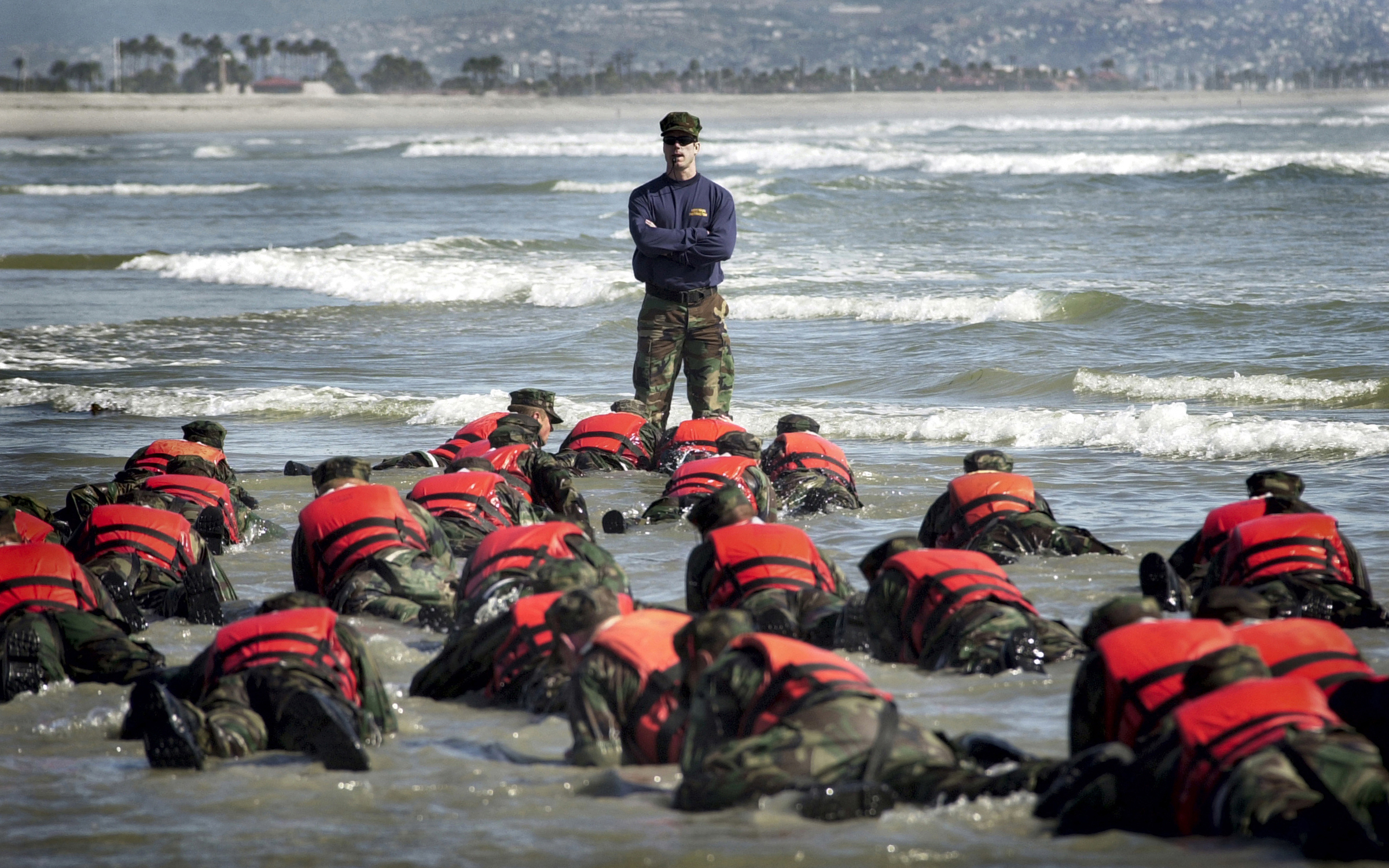
The training to become a Navy SEAL is legendary for its difficulty, and the statistics back it up. Basic Underwater Demolition/SEAL (BUD/S) training is a six-month ordeal that sees failure rates of 75-80%, and for some classes, it has been even higher. The course is designed to find personnel with an extraordinary tolerance for physical pain and mental stress. The most notorious part of BUD/S is "Hell Week", five and a half days during which candidates are constantly cold, wet, hungry, and sandy. They run more than 200 miles and do strenuous physical training with fewer than four hours of total sleep. Most who quit do so during this phase. BUD/S is the ultimate test of an individual's will to never give up, making it arguably the most difficult military school to complete.