%201.svg)


%201.svg)


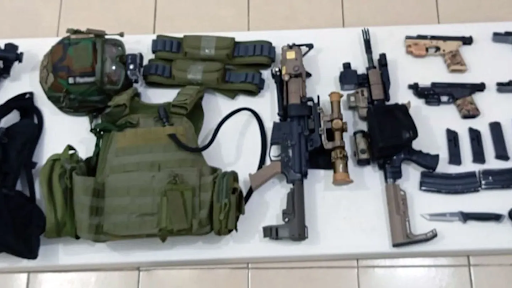


In today’s edition of bizarre happenings, an American man was arrested in Atlacomulco, Mexico, after being found armed with tactical gear, multiple firearms, and what appeared to be falsified CIA credentials—raising concerns over potential links to organized crime or covert operations. He was in possession of six firearms, magazines, and live ammunition. This unnamed individual was arrested in the industrial area of Atlacomulco, approximately 80 miles from Mexico City, after the police were alerted about an armed man acting aggressively on an apartment balcony. At the time of his arrest, he was wearing a helmet and tactical vest, while armed with a rifle and knife. Mexican officials claim that the United States Embassy asserted that he was not employed by the government, and instead suspect him of having involvement in organized crime. An official statement from the Secretariat of Security of the State of Mexico reads: “for his probable involvement in the crimes of disturbing the peace and possession of weapons designated for exclusive use by the Army”. Authorities also wrote that, “the individual was carrying a credential with the inscription ‘CIA’”. The US government has remained silent on the matter.
Though the Mexican government claims this man was not a member of the Agency, the CIA has maintained a presence in Mexico since the Cold War Era. Additionally, the CIA has a history of backing regime changes across Latin America. In the 1980s, there were allegations that the Agency colluded with Mexican drug traffickers in order to fund the Nicaraguan Contra rebels to overthrow the Sandinista government. The CIA asserts that their 1980s involvement in Mexico was centered around counter-insurgency. Though fictional, the popular TV show, Lioness, depicts US intelligence involvement in the war against cartels, mirroring real world possibilities. Just this year, the CIA increased drone surveillance in Mexico to detect fentanyl labs.
Whether the man was mentally ill and entrenched in a world of make believe, involved in arms trafficking, or operating under a covert status remains unclear. With the U.S. government silent, and Mexican authorities suggesting transnational organized crime links, the incident raises urgent questions about cross-border intelligence, rogue actors, and public transparency, especially during a politically contentious era where US-Mexico relations are faltering.