%201.svg)


%201.svg)


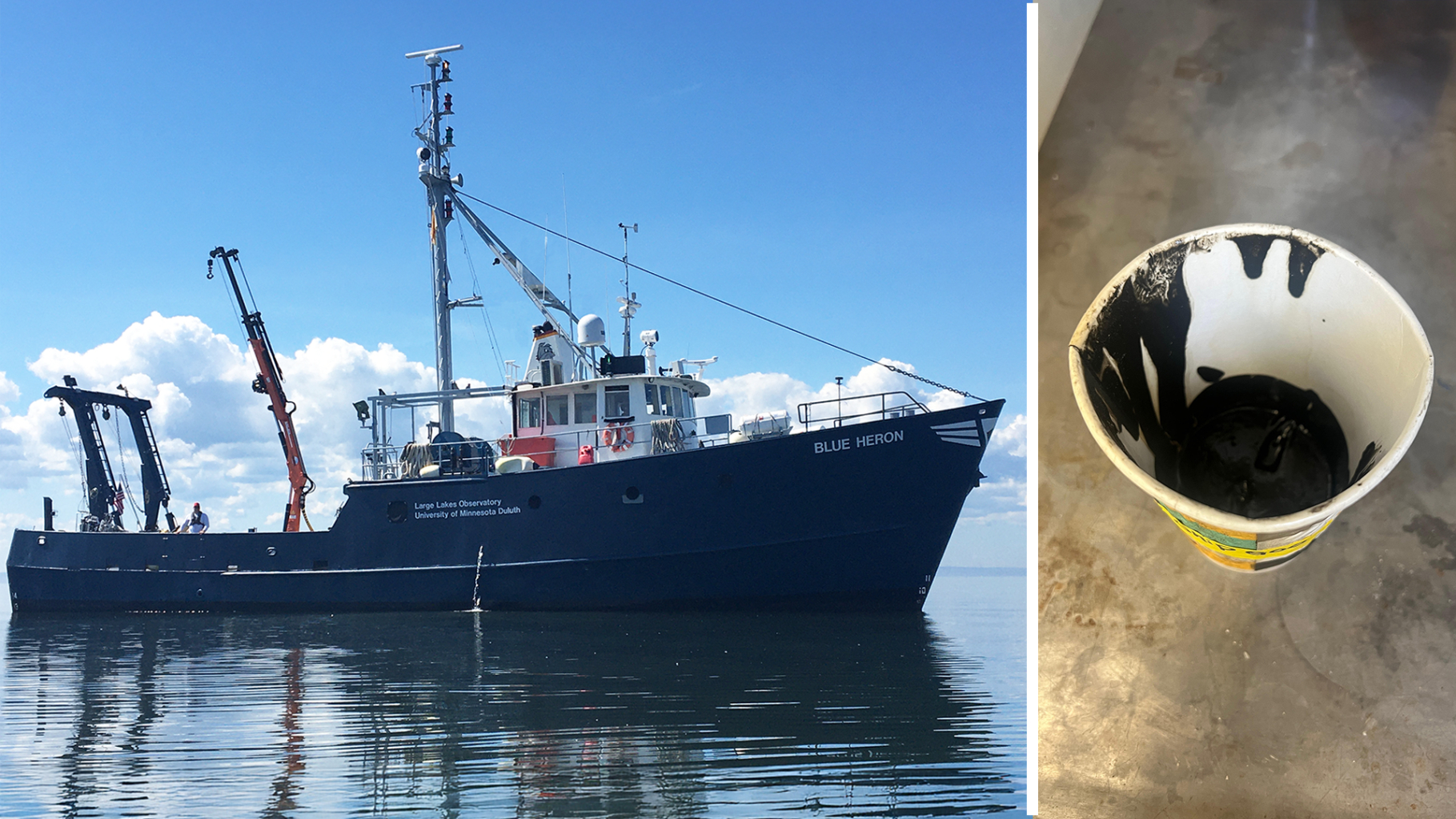


A mysterious, tar-like substance discovered in the rudder shaft of a Great Lakes research vessel has sent a ripple of excitement through the scientific community. Tentatively designated "ShipGoo001," the sample is not an industrial pollutant but a complex, thriving community of previously unknown microbes, potentially opening a new chapter in microbiology.
The discovery was made in late June by researchers from the University of Minnesota Duluth's Large Lakes Observatory. During routine maintenance on their flagship research vessel, the R/V Blue Heron while it was docked, technicians found a thick, black, gelatinous substance coating the oily rudder mechanism. Initially fearing it was a sign of a chemical leak or a new invasive species, the team quickly realized they were looking at something far more unusual, and like any good Marine would, they poked it (for science!)
"We've never seen anything like it," Dr. Alisha Vance, a microbial ecologist at the LLO, stated in a university press release dated July 15, 2025. "Under the microscope, it became clear this wasn't just grime. It's a cooperative, a living biofilm composed of dozens of microbial species that are completely new to science."
This living "goo" appears to thrive in a harsh environment (a greasy, metallic space with fluctuating temperatures and low nutrients) that would be toxic to most known organisms outside of the Navy. This resilience is precisely what makes the discovery so significant, as it had no energy drinks or zynbabwes available. Scientists are now working to sequence the DNA of the various microbes within ShipGoo001 to understand how they survive and interact.
The potential applications are vast. Researchers speculate that some of these microbes could possess unique metabolic abilities, such as breaking down hydrocarbons. This could lead to revolutionary new methods for bioremediation; using microorganisms to clean up oil spills and industrial pollutants that plague many of the world's waterways, including the Great Lakes themselves.
While the discovery of ShipGoo001 has caused some public confusion due to its unusual nature, the scientific community is focused on the sample's incredible potential. What began as a routine maintenance check on a ship's rudder has now launched a full-fledged scientific investigation. This accidental find serves as a powerful reminder that even in the most familiar and industrial corners of our world, profound biological mysteries are still waiting to be discovered, even outside of a barracks room.