%201.svg)


%201.svg)


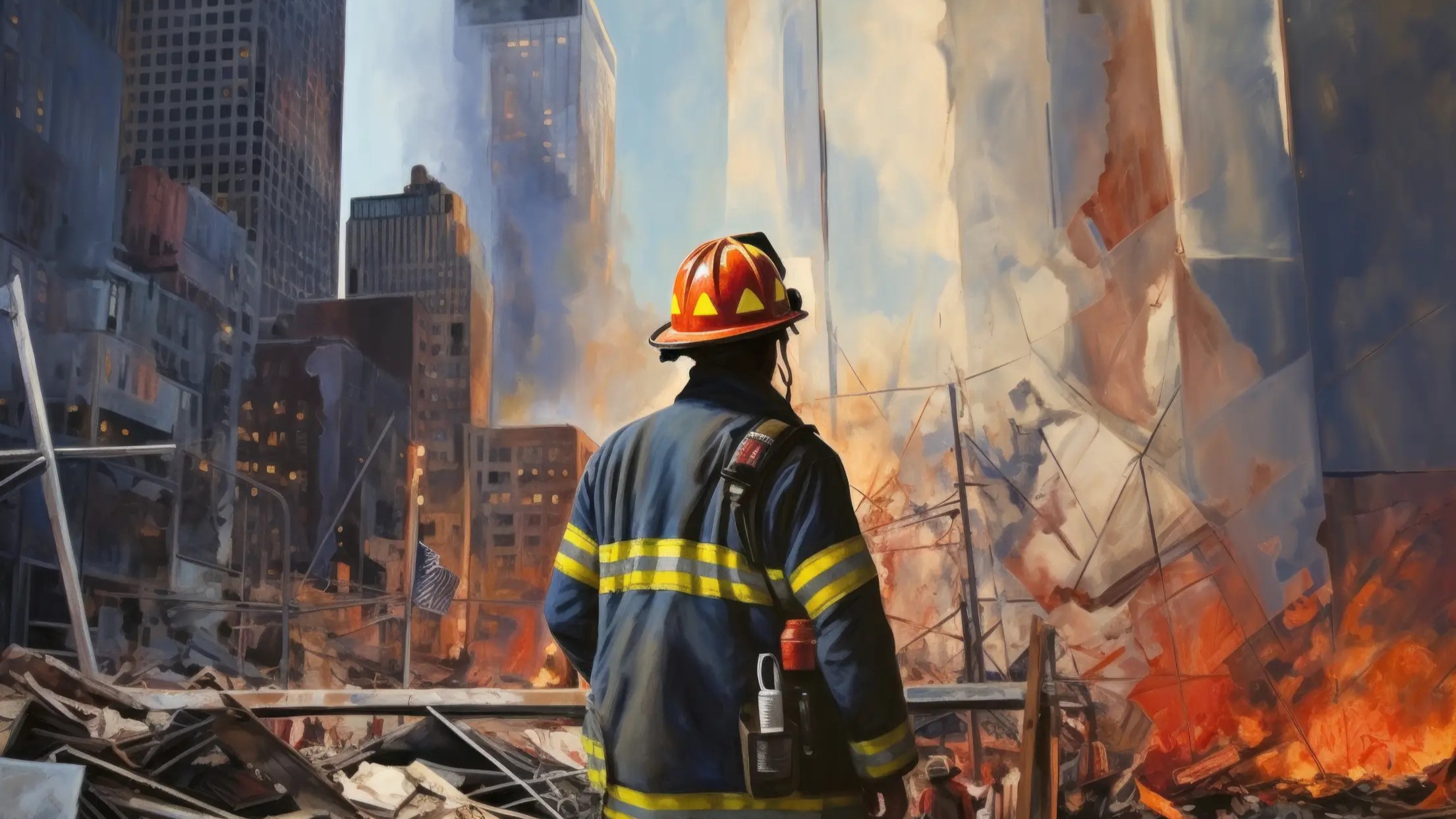


The September 11th, 2001 attacks were a defining moment for the United States, and nowhere was the impact felt more acutely than within the nation's first responder community. The collapse of the World Trade Center towers presented firefighters with an incident of unprecedented scale and complexity, tragically exposing critical gaps in technology, communication, and equipment. In the two decades since, the lessons learned from that day have served as a powerful catalyst for innovation, fundamentally reshaping how firefighters operate and equipping them with tools that have made the profession safer and more effective.
Interoperable Communications Systems
One of the most catastrophic failures on 9/11 was in communication. Fire department radios could not communicate with police department radios, and radio signals could not penetrate the steel and concrete of the towers, leading to chaos and conflicting information. In response, the 9/11 Commission Report strongly recommended a nationwide interoperable communications network. This led to the creation of the First Responder Network Authority, or FirstNet. This dedicated, high-speed wireless broadband network allows police, fire, and EMS personnel from different agencies and jurisdictions to communicate seamlessly on a shared platform, ensuring a unified command structure during large-scale emergencies.
Advanced Personal Protective Equipment (PPE)
The health and safety of the 343 FDNY members who died on 9/11, and the thousands more responders who have suffered from health complications since, brought a renewed focus on personal protective equipment. Turnout gear is now lighter, more flexible, and offers greater protection from heat and carcinogens, using advanced materials like PBI and Kevlar blends. The most significant leap has been in Self-Contained Breathing Apparatus (SCBA). Modern SCBA systems are more ergonomic, feature higher-pressure air cylinders for longer duration, and integrate heads-up displays that show air levels directly inside the facepiece. Many now also include built-in thermal imaging cameras, allowing firefighters to see through thick smoke to find victims or the seat of the fire without having to carry a separate, bulky camera.
The Rise of Drones and Robotics
Situational awareness is critical in any emergency, and the sheer scale of the WTC site made it impossible to get a complete picture from the ground. Today, Unmanned Aerial Vehicles (UAVs), or drones, have become an indispensable tool. Equipped with high-definition and thermal cameras, drones provide incident commanders with a real-time aerial overview, helping to identify hotspots, track fire progression in wildland fires, and search for missing persons. In situations like a structural collapse, ground-based robots can be deployed into unstable voids to search for survivors or assess hazards, keeping human firefighters out of the most dangerous areas until they are deemed safe.
Enhanced Situational Awareness and Data Management
Before an emergency, firefighters often had limited information about the buildings they were entering. The post-9/11 era has seen an explosion in data-driven firefighting. Geographic Information System (GIS) mapping is now used to track the location of resources, hydrants, and hazardous materials in real-time. Furthermore, Building Information Modeling software can provide firefighters with detailed 3D blueprints of complex structures en route to a call, showing them stairwells, utility shutoffs, and potential structural hazards. This digital pre-planning gives them a critical advantage before they ever set foot on the scene.
Improved Fire Suppression and Building Materials
The collapse of the Twin Towers, which were built of steel, prompted intense research into how to make buildings more resilient to fire. This has led to the development and widespread adoption of advanced intumescent, fire-resistant coatings for structural steel that can withstand extreme temperatures for longer periods. Simultaneously, fire suppression technology has advanced beyond traditional sprinklers. High-pressure water mist systems are now used to extinguish fires with less water damage, and sophisticated foam suppression systems are more effective on difficult-to-extinguish liquid and chemical fires, providing a more robust defense for critical infrastructure.
The legacy of 9/11 is one of both tragedy and transformation. While no technology can ever replace the courage and skill of a firefighter, the innovations born from that day have provided a new generation of responders with the tools to work smarter, communicate better, and operate more safely, ensuring the lessons of the past continue to protect the heroes of the future.