What Ibogaine Showed Me That 15 Years of Treatment Couldn't
USMC veteran discovers that ibogaine-assisted therapy was a catalyst, not a cure.
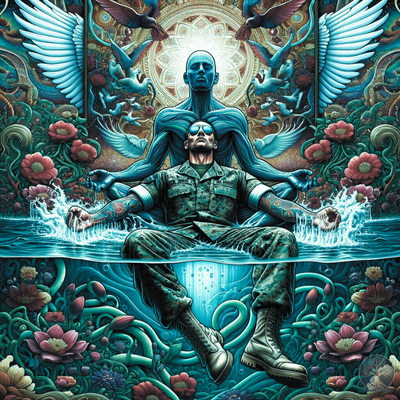
Late at night, I sat in my truck outside the Denver VA Hospital, staring at the dashboard. I couldn't bring myself to start the engine.
I'd just finished another round of appointments. Symptoms documented. Medications adjusted. Boxes checked.
But the question burning in my chest, "How do I make life matter again?", was never discussed.
That moment didn't just leave me frustrated. It reframed everything. Traditional treatment could help me manage symptoms. It couldn't restore what moral injury had taken: my sense of purpose, my connection to what mattered, my belief that I deserved to be here.
A few weeks later, I found myself at The Mission Within in Rosarito, Mexico, preparing for ibogaine-assisted therapy. I'd given up hope that anything could reach that wound. I was wrong.
When Logic Can't Touch the Wound
Traditional therapy gave me tools. Cognitive behavioral therapy helped me challenge distorted thoughts. Narrative therapy helped me understand the impossible circumstances I'd faced at that checkpoint.
Here's what my therapist and I realized early: I could explain the complexity of the situation perfectly. I could articulate why the choice was impossible, why any decision would have violated something I valued. Logically, I understood it wasn't a moral failure.
But understanding didn't make me okay with it.
I could zoom out and see the context. I could tell myself I'd made the best decision possible under impossible circumstances. And then I'd go home, look at my own kids, and the voice would return: "You're unforgivable. You don't deserve this."
Moral injury doesn't live in your logic. It lives in your identity. And no amount of cognitive reframing can separate a wound that's fused with who you believe you are.
I needed something that could reach that place.
What the Medicine Showed Me
Pain Isn't the Problem. The Story About the Pain Is
I went in expecting to relive the trauma, to process it one more time, and finally put it behind me.
The medicine had different plans. Instead of showing me the events under a microscope, it zoomed out to a stratospheric view. I saw the chain of events, the infinite branches of impact rippling outward. Not to minimize what happened, but to show me its place in a larger story.
The shift: Pain was inevitable. It was the exact pressure I needed to change. But the suffering, the belief that I was broken, that I was unforgivable, that was optional. That was a story I'd been telling myself.
I Didn't Want to Die. I Wanted to Stop Living a Lie
For years, the voice in my head said, "Just end it. The world would be better without you."
The medicine showed me the truth: I didn't want to die. I loved life. What I wanted was an end to the false story I was living: the performance, the constant busyness, the refusal to feel anything real.
I wanted to be truly alive.
When I saw that distinction clearly, the suicidal narrative lost its power. It wasn't truth. It was a defense mechanism that had outlived its usefulness. I showered it with love, and it disappeared like dust in the wind.
The Voice That Said "You're Worth Saving"
This is the shift that matters most: I heard my own voice, not the shame, not the guilt, remind me that I was worth saving.
For fifteen years, I couldn't separate what I'd done from who I was. The wound had become my identity. Ibogaine didn't erase what happened. But it helped me distinguish between the part of me that was afraid and protecting itself, and the part of me that knew, beneath everything, that I was still whole.
That distinction is everything. Moral injury fuses the wound with identity. Healing requires separating them again.
What Ibogaine Didn't Do
Ibogaine wasn't a cure. It was a catalyst.
The medicine opened a door and showed me I was worth walking through it. But the real work came after: learning to live with presence instead of distraction, reconnecting with values I'd buried under shame, rebuilding relationships I'd let fall apart, finding purpose beyond just surviving.
Ibogaine gave me something I hadn't felt in fifteen years: hope that healing was actually possible.
But I still had to do the healing.
Moral injury lives in the gap between who you are and who you believe you've become. Traditional treatment can help you manage symptoms. But if you've lost connection to your values, your purpose, your belief that you deserve to be here, you need something that can reach that foundation.
For me, that catalyst was ibogaine. The restoration work came after.
Next time, I'll share what that restoration actually looks like.